
Arlington Heights Directory Collections
The Arlington Heights city directory shelf is not one unbroken run. A dated statewide inventory identifies municipal books and suburban reverse directories, while current library and archive pages supply the access route. Treat the older inventory as a lead and ask staff to confirm current location or format.
| Collection | Years | Where Held | Access |
|---|---|---|---|
| Municipal city directories | 1930, 1935, 1939, 1943, 1966-1971 | AHML, per 1999 holdings inventory | Microfilm; confirm current shelf |
| Haines near-north criss-cross | 1979-present in dated inventory | AHML Shackley Room | On-site, above microfilm cabinets |
| 1939 Municipal Directory | 1939, 123 pages | Illinois Digital Archives; local ownership | Free scan; reproduction limits |
| Arlington Heights phone books | 1931-1932, 1937-1971, 1977-1988 and later lead | AHML dated inventory | Microfiche; verify exact year |
| Subdivisions compilation | 1883-1960 | AHML Shackley Room | Two reference volumes |
| Museum research library | Mid-1800s to present collection span | Center for Suburban History | Free library; appointments for archives |
No authoritative source found the first-ever local directory before 1930 or the last printed edition. No verified Polk run was located either. Those are real gaps, not places to guess. The 1939 volume has firm metadata: Daisy P. Daniels compiled it, H.C. Paddock Sons published it, and Illinois Digital Archives hosts the scan tied to local institutional holdings.
Open the 1939 Arlington Directory
The Illinois Digital Archives record provides free page-level access to the 1939 municipal directory. Its 123 pages form a civic handbook: covers and title matter, a foreword, Trade and Civic Association material, official information, street guides, historic data, a street directory, alphabetical people and business entries, advertising, classifieds, churches, and organizations.
The image below comes from the official digital collection landing page.
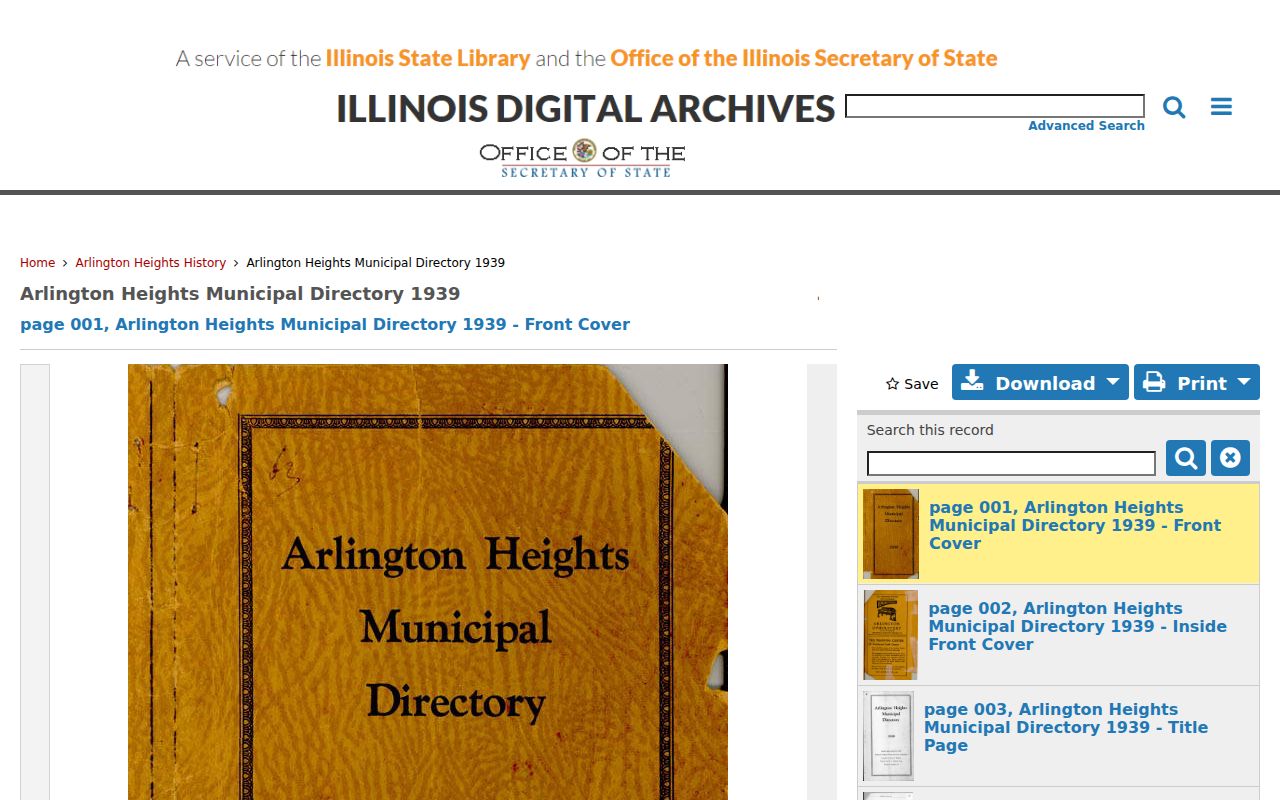
The page-level structure matters because a citation to page 7 means a street guide, while pages 67 through 114 sit in the alphabetical sequence. Save the scan ID, printed page, edition, and category with every hit.
| Pages 7-9 | Street guide and street-location material |
|---|---|
| Page 10 | Historic data and chronology leads |
| Pages 11 onward | Address-first street directory sequence |
| Pages 67-114 | Alphabetical resident and business entries |
| Pages 121-122 | Churches and local organizations |
Arlington Heights Library Directory Shelf
Arlington Heights Memorial Library genealogy and local history centers on the Kathrine Shackley Room on the first floor. Books, newspapers, maps, microfilm, databases, FamilySearch access, and the Boyd-Huff Arlington Heights Collection support both surname and address work. One-on-one appointments with the Genealogy and Local History Librarian provide a fallback when a catalog title or microfilm run is unclear.
The AHML catalog offers an index selector, text search, basic and advanced modes, article search, Boolean controls, and filters.
A catalog match proves that a title is described, not that its pages are online. Ask whether the desired year is on microfilm, microfiche, a licensed database, or in the local-history room.
AHML is at 500 N Dunton Avenue and can be reached at 847-392-0100. The research observed summer 2026 hours, but visitors should verify the schedule before using physical city directories or staff-assisted databases.
Read Arlington Heights Directory Entries
A directory line is a dated statement from that edition, not a complete biography. The inspected 1939 scan combines people, businesses, offices, advertisements, and groups. Page 67 begins an alphabetical stretch with Ackerman through Ahlers, while nearby pages continue the sequence. The research did not verify a complete abbreviation key, so transcribe only what appears and mark an absent field as “not shown.”
| Printed name | Keep spelling, initials, and order exactly as shown. |
|---|---|
| Role or category | Identify resident, business, office, advertiser, subscriber, or group when printed. |
| Address | Copy house number, direction, street, and unit without silent modernization. |
| Relationship or occupation | Record only spouse, widow, work, or firm details actually printed. |
| Citation | Save year, page, scan ID, heading, and adjacent-entry context. |
- Criss-cross directory
- A volume arranged by street and house number, often with a second name index.
- Householder index
- An address-oriented list of the person or subscriber associated with each listed home.
- Abbreviation key
- The publisher's legend for shortened roles, street terms, relationships, and other marks.
A field should not be expanded from habit. If an abbreviation key cannot be found, quote the short form, cite its page, and leave the meaning unresolved. Then compare the entry with another year, a newspaper, a deed, or a vital genealogy record.
Arlington Heights Museum Records
The Arlington Heights Historical Museum collection describes more than 40,000 objects, documents, and photographs from the mid-1800s forward. Its Center for Suburban History Research Library holds photographs, clippings, maps, city directories, and regional material. Local-history library access is free; archive and three-dimensional object work needs an appointment.
The official collection page appears in the capture below.
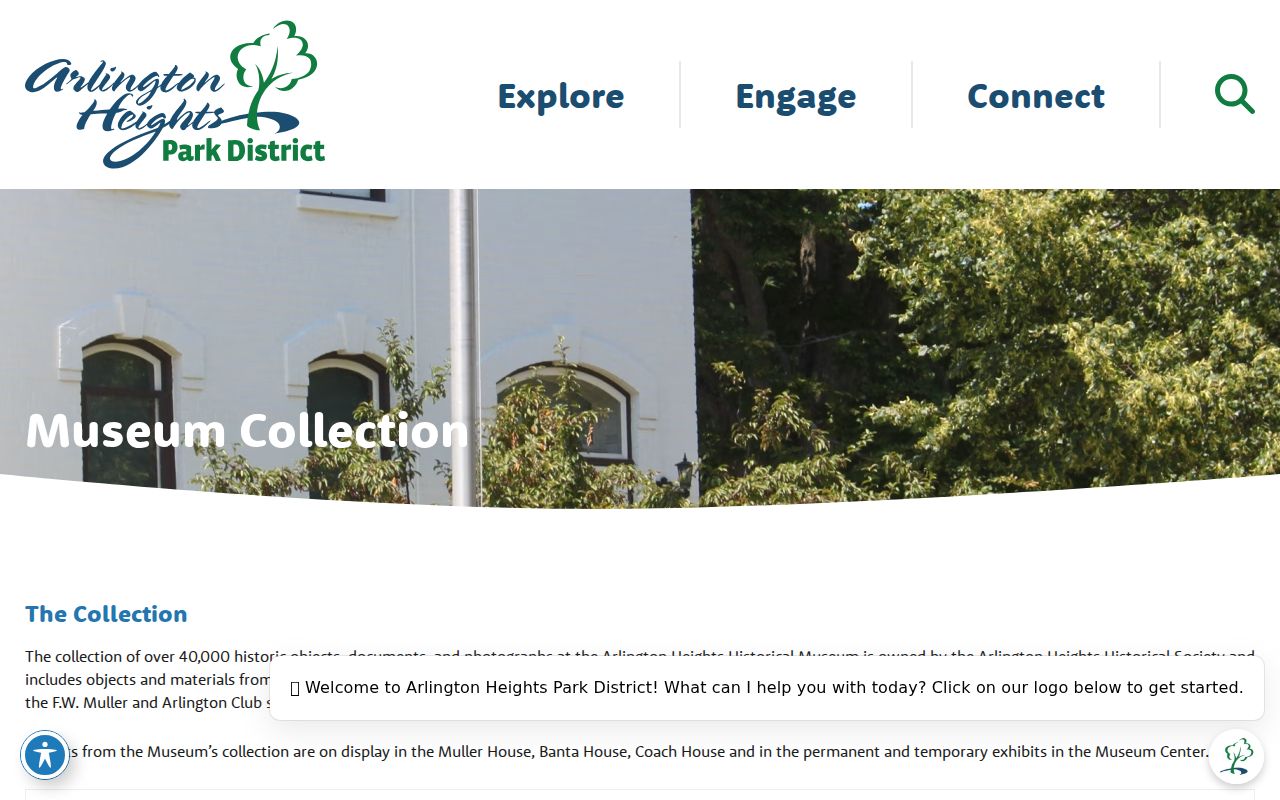
The museum can connect a city directory listing to a local photo, map, clipping, early phone directory, or institutional file without turning the directory line into a stronger claim. Research access includes an initial free period, then stated staff-research and scan fees. Confirm current rates with the museum at 847-255-1225.
Arlington Heights Directory Timeline
Directories become clearer when placed beside the institutions and boundary changes that created them. The timeline below uses only dated anchors from Arlington Heights and Cook County sources.
| Year | Directory or archive milestone |
|---|---|
| 1871 | Cook County fire destroyed county records from 1831 through 1871, making substitutes vital. |
| 1887 | Arlington Heights incorporated, changing the jurisdiction label used in later records. |
| 1926 | Voters established the public-library institution that now keeps local-history sources. |
| 1930 | Earliest verified city-directory year in the dated holdings inventory. |
| 1939 | The 123-page municipal directory created the scan now available through IDA. |
| 1966-1971 | Later municipal directory run listed in the historical holdings inventory. |
| 1979 | Near-north suburban Haines criss-cross lead begins. |
| 2026 | AHML centennial work and a planned time capsule create a future local archive. |
The fire gap is especially important. A missing early land or vital record may reflect loss, not a failed name search. The Illinois Regional Archives Depository Cook guide points to surviving county series and depository contacts. Newspapers, church and cemetery material, maps, and museum sources can serve as substitutes.
Arlington Heights in Civic Records
Illinois House Resolution 695 records incorporation on January 18, 1887, with roughly 1,000 residents, and links farming, the train depot, and commuter growth to local development.
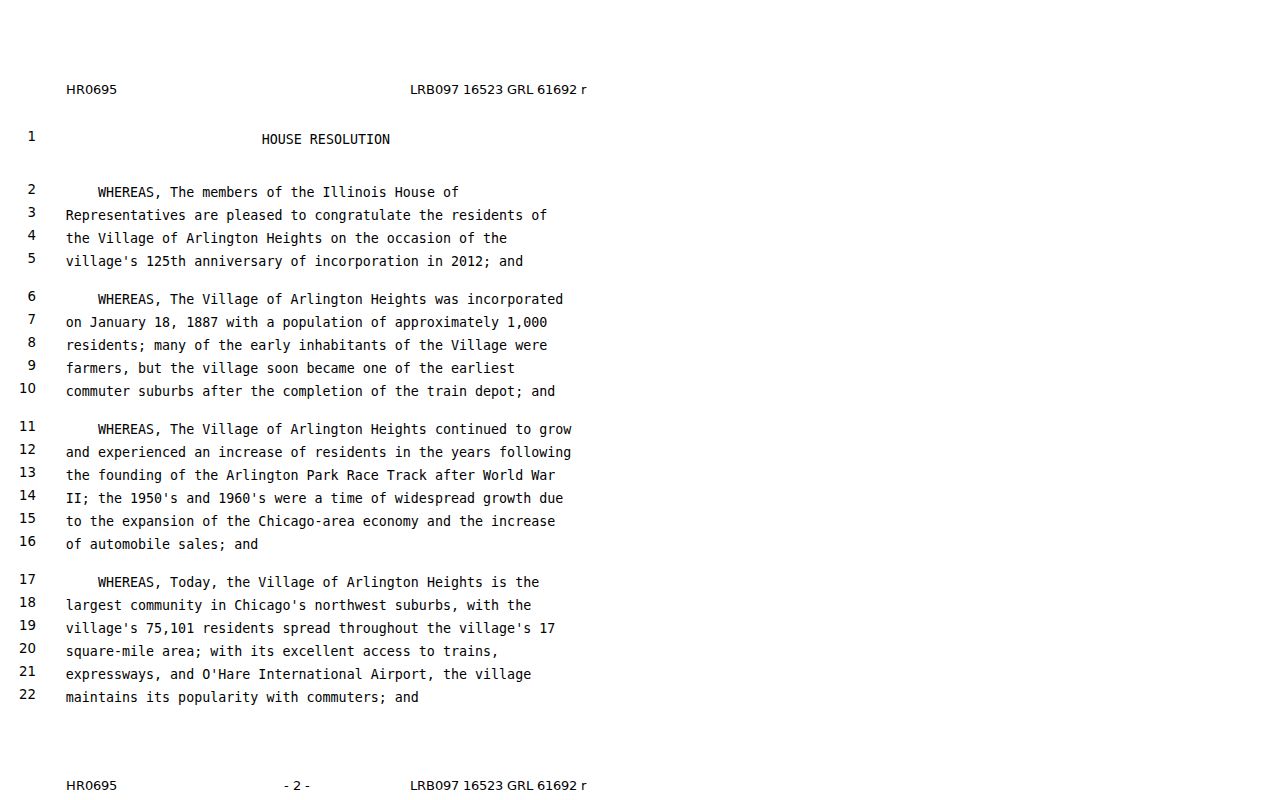
This official chronology gives directory entries a sound civic frame. It also explains why Dunton, Arlington, and Arlington Heights should all be searched as historical place-name variants.
Cook GIS incorporation and annexation records extend the boundary trail. A query observed 516 Arlington-matching actions from 1887 through 2024. Preserve each action code and year rather than assigning today's Village label to every old directory address.
Trace Arlington Heights Family History
City directories fill gaps between federal census years and can show when a name, address, or business relationship first appears or changes. They still need support. Census records are public through 1950 under the 72-year rule, while local newspaper and obituary tools can provide dated context between editions.
- Find the first likely name entry. Save edition, page, category, spelling, and printed address.
- Check the preceding and following available editions. Log appearances and gaps without guessing why a name vanished.
- Use the street guide or Haines criss-cross volume to test the address and nearby listings for the same year.
- Pair the directory years with the 1930, 1940, or 1950 census when eligible, retaining the old geographic label.
- Use AHML newspapers, obituary tools, church or cemetery leads, deeds, and Cook genealogy requests for independent support.
A person can disappear because of a move, death, a missed canvass, a changed name, an unlisted phone, or a publication gap. Only another source can distinguish those causes. Write “listed,” “recorded,” or “appears at” and include the date. If the search later shifts to a modern name, the Arlington Heights resident lookup explains how to verify one person across current official indexes.
AHML's HeritageHub obituary lead reaches far beyond local years, while its newspaper tools cover different titles and date spans. Retrieve the actual notice or article and note publication, date, and page. An index result alone is not a death record.
Arlington Heights Archives Still Grow
Local history is not frozen. AHML's 2026 centennial program includes a community-selected time capsule planned for opening in 50 years. That project is a clear example of residents and institutions choosing the evidence a future researcher may see. Save the exhibit date and page snapshot because the web record will change.
Recent museum recognition and ongoing Illinois Digital Archives work also show why the access route matters. A digital image can live on a state platform while the physical object and reproduction authority remain with Arlington Heights institutions. Cite both the host and the owning collection.
Research habit. Save the edition, page, institution, access date, and role shown, then verify a person with a second independent source.