
Finding Arlington Heights Residents
The most useful Arlington Heights residents directory route depends on what is known. An address belongs first in the Cook County property systems. A person's name may fit the Clerk Recordings index, the court party search, an old municipal directory, or a professional license search. An old address belongs in the library's criss-cross volumes and the digitized 1939 directory before it is compared with a modern parcel. Each source records a role, not a universal statement of residence. A deed names parties to a transfer. An assessor page describes a taxed parcel. A directory lists an entry at the time its publisher gathered information.
Use dates as part of every match. Arlington Heights sits in Cook County, so the Village does not hold the main deed, court, tax, or vital-record indexes. The Village does keep permits, inspection material, ordinances, minutes, maps, and other local documents that may connect an address with a named applicant. No open source lists every renter, child, unregistered voter, or person who asked to stay private. The sound approach is to record what a source actually says and then seek one independent match.
- Enter the exact street address in the Cook County Assessor or Property Tax Portal and save the 14-digit PIN.
- Carry that PIN into CookViewer to confirm the parcel and into Clerk Recordings to find indexed land documents.
- For a known person, use the exact-match Illinois voter tool or the Cook court party search only when the required details fit.
- For an older household, check Arlington Heights Memorial Library directories, newspapers, maps, and genealogy sources.
- Ask the Village through FOIA when a permit, inspection, map, or municipal file is not already online.
Arlington Heights Directory Offices
Three Cook County offices supply much of the current directory trail. The Clerk now performs the former Recorder of Deeds work and maintains recordings, vital records, and suburban election services. The Assessor connects an address to a PIN, valuation facts, parcel characteristics, permits, sales, exemptions, and appeals. Election officials provide a registration-status check that requires personal facts; it is not a public name list. The detailed address sequence belongs in the Arlington Heights street directory, while these contacts identify the right custodian.
Cook County Assessor
118 N. Clark Street, Third Floor
Chicago, IL 60602
312-443-7550
Cook County Clerk Elections
69 W. Washington Street
Chicago, IL 60602
312-603-0906
Arlington Heights Starts With PIN
A Property Index Number is the stable bridge among Cook County property systems. The Assessor accepts house number, direction, street name, suffix, unit, city, and neighborhood, although its live form may present a CAPTCHA. The county Property Tax Portal also accepts street, unit, city, and ZIP. That makes it useful when the postal label is known but the parcel is not. Search results should be checked against the situs address, meaning the physical property address, because the tax mailing address can belong to an owner somewhere else.
The Assessor address search shown below is a starting point, not proof that the named owner occupies the home.
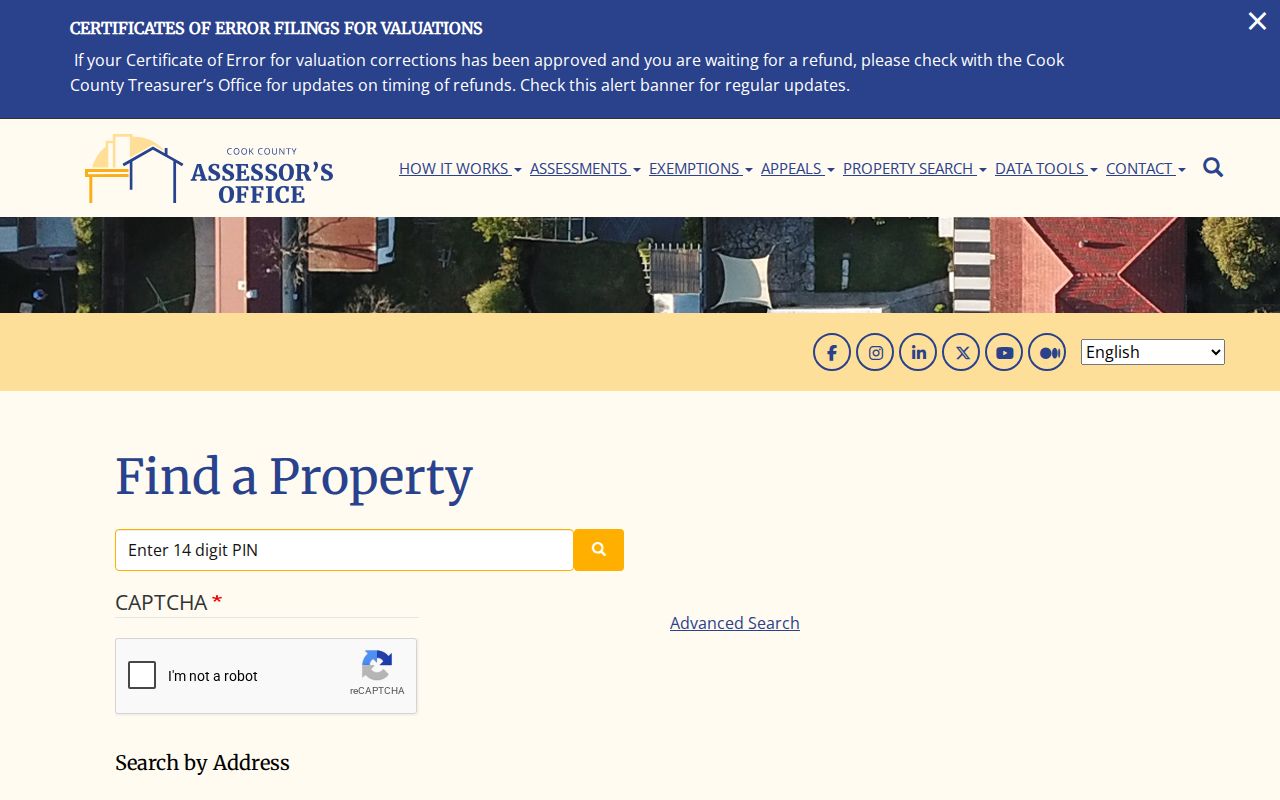
Once the PIN is confirmed, the parcel details, tax history, deed index, and map can be compared without relying on a spelling-only name match.
| Search field | Use | Check |
|---|---|---|
| House number and direction | Narrows the street address | Do not omit N, S, E, or W |
| Street name and suffix | Matches the Assessor index | Try the official map spelling |
| Unit | Separates condominium parcels | Confirm the returned PIN |
| City or neighborhood | Limits Cook County results | Postal city can differ from municipal limits |
| PIN | Moves between county systems | Preserve all 14 digits |
Mapping Arlington Heights Parcels
CookViewer adds geography to the resident records trail. It searches an address, PIN, intersection, or nearby place, then displays parcel geometry and other county layers. Its nearby tool can help identify adjacent parcels, and its map and report controls preserve a dated view. The research noted a May 28, 2026 release, so a saved report should include the access date. An imprecise address search may return properties within roughly 100 feet rather than selecting the intended parcel.
Open the CookViewer parcel map before attaching any name to the mapped lot.
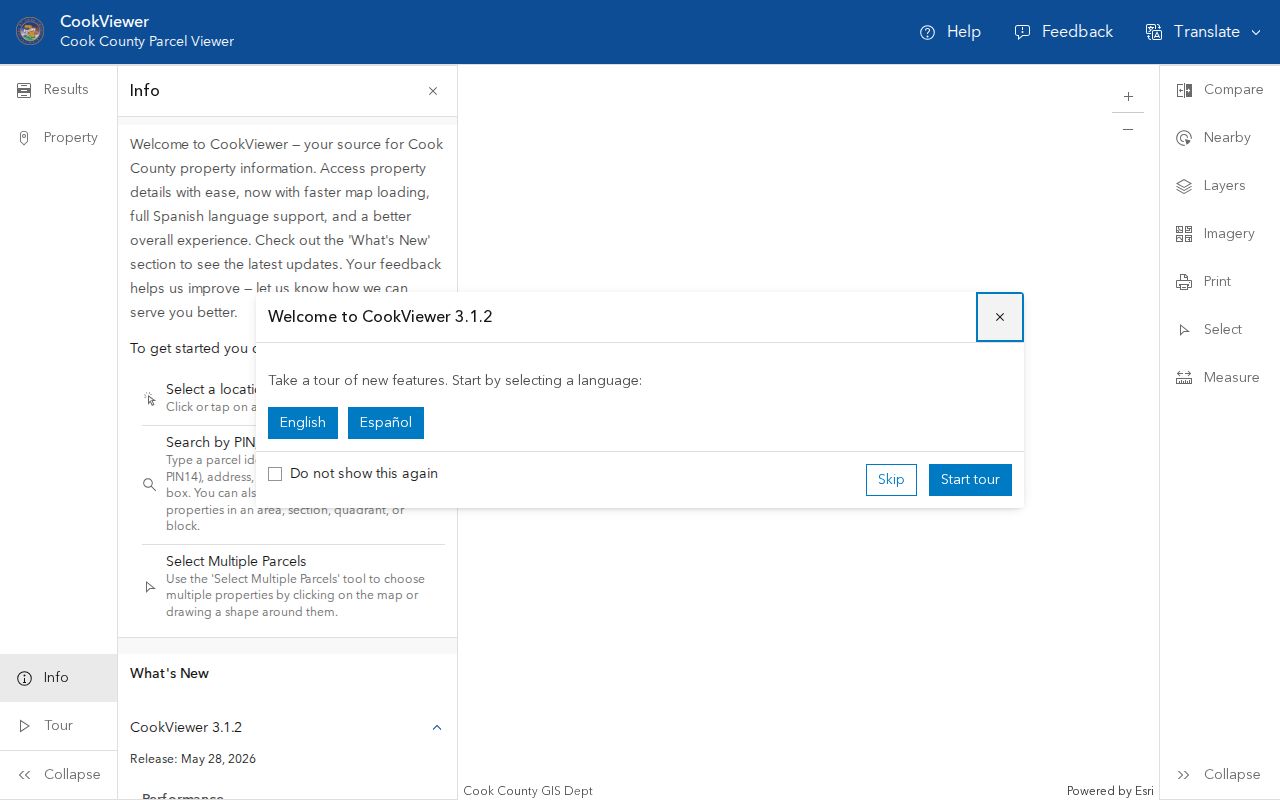
The highlighted polygon and PIN should agree with the Assessor result. If they do not, treat the match as unresolved.
- Parcel
- A legally described tract shown in the county property system.
- PIN
- The 14-digit Property Index Number used to connect Cook County records.
- Index
- A searchable list that points to a document; it may not include the document image.
- Criss-cross directory
- A directory arranged by street and address instead of only by surname.
Cook Clerk Directory Trail
The current “Recorder” search is now a Cook County Clerk service. Recorder operations transferred to the Clerk on December 7, 2020, but older guides and search habits still use the former office name. The Clerk Recordings System accepts a PIN, address, grantor, grantee, document number, type, date range, trust number, subdivision, and legal-description details. Grantor means the party giving an interest; grantee means the party receiving it. Results can connect a person with a deed, mortgage, lien, plat, release, or other recorded event, but the role and date must be read before drawing a conclusion.
The Cook County Clerk overview identifies the office's wider duties.
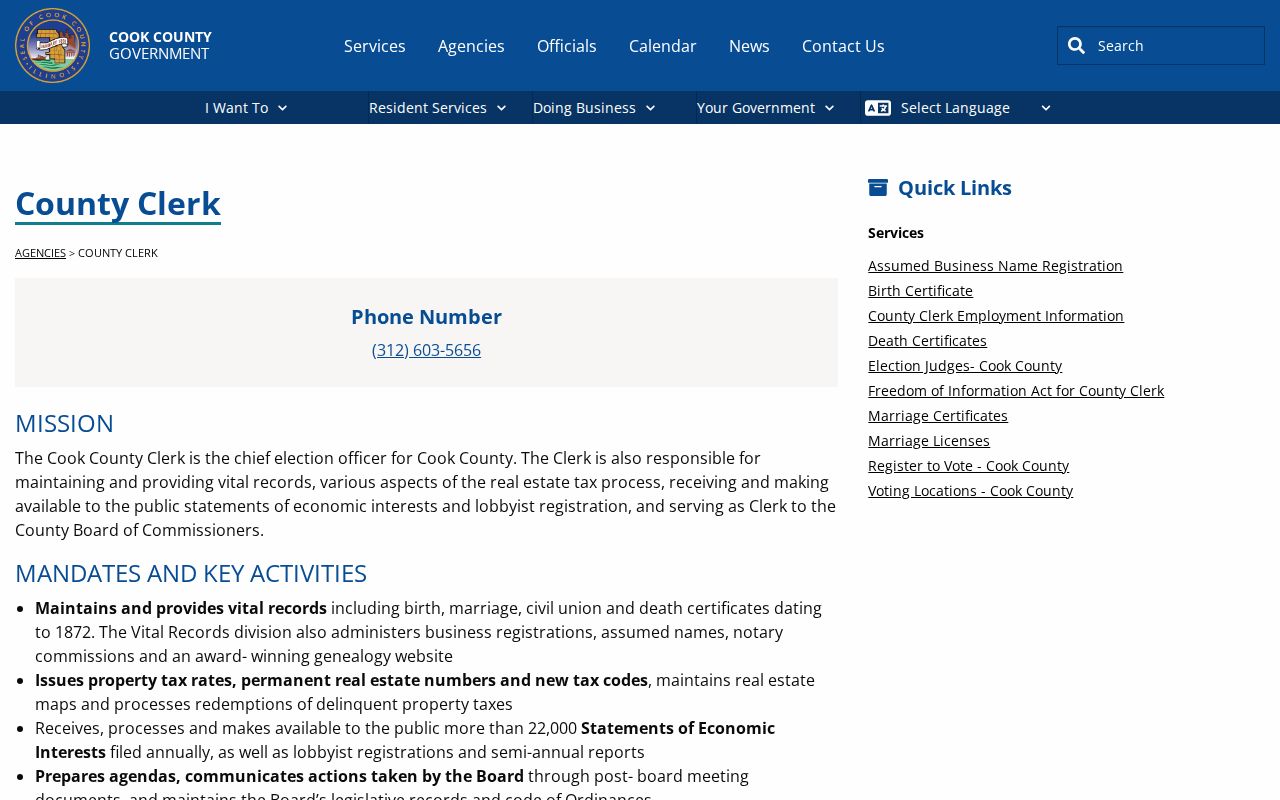
For land records, follow the recordings branch and keep the document number as the key to a later copy request.
Visit Cook County Clerk Recordings for the current access routes.
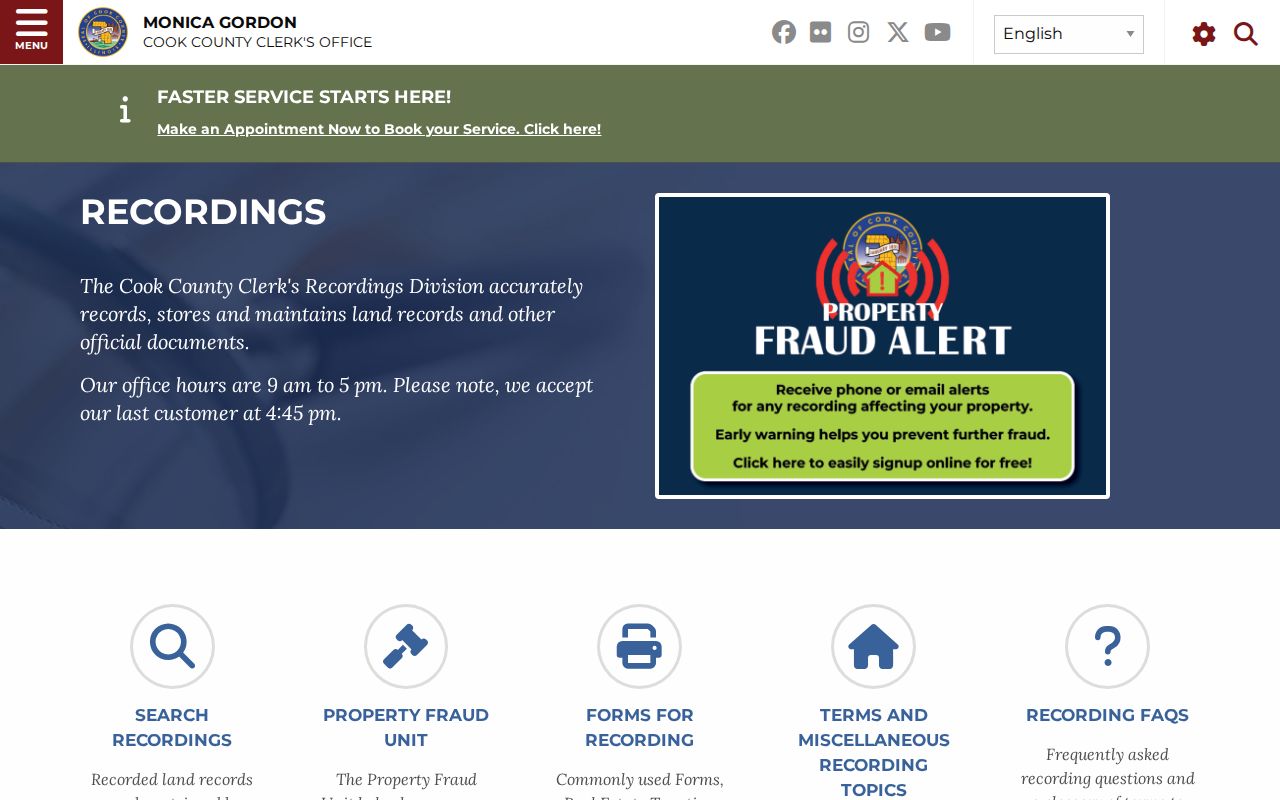
The service page also links forms, fees, fraud-alert help, and the recordings search, which makes it the better bookmark than an obsolete Recorder address.
Current Arlington Heights Directories
No current Arlington Heights residents directory acts as a complete household list. Instead, official sources cover property owners, registered voters checking their own status, parties named in recorded documents, licensed professionals, business roles, permit applicants, and court parties. Searchers should pick the roll that fits the person's likely role and the date in question. A current tax record is strongest for parcel ownership, while a voter response concerns registration. Neither alone proves who sleeps at an address today.
| Source | Who It Lists | Keeper | Access |
|---|---|---|---|
| Assessor and tax roll | Parcel owners and mailing contacts | Cook County | Free online |
| Registration lookup | The searcher's own voter status | Illinois State Board of Elections | Exact-match form |
| Clerk Recordings index | Parties to recorded land documents | Cook County Clerk | Free index |
| Village records | Officials, applicants, and named parties | Village of Arlington Heights | Online or FOIA |
| HANA and Northgate | Organization contacts and community geography | Local associations | Public pages or member records |
The property and recordings systems work best with an address or PIN. Court and license systems work by name but require care with common names. The Illinois voter lookup asks for first name, last name, birth date, ZIP, and then address details. It cannot be browsed as a neighborhood roll. When the task concerns one person rather than a parcel, the Arlington Heights resident lookup workflow shows how to compare roles and dates without overstating a match.
Arlington Heights Village Records
The Village keeps a different part of the resident record. Its files include permits, inspections, licenses, ordinances, minutes, plats, maps, contracts, invoices, and police or traffic reports subject to exemptions. Civic Access handles parts of the permit and inspection workflow. When a record is not posted, the Village accepts an Illinois Freedom of Information Act request through NextRequest and other stated channels. A request should describe the record, department, address, and date range rather than ask the Village to research a person.
Start at the official Village of Arlington Heights site to identify the responsible department.
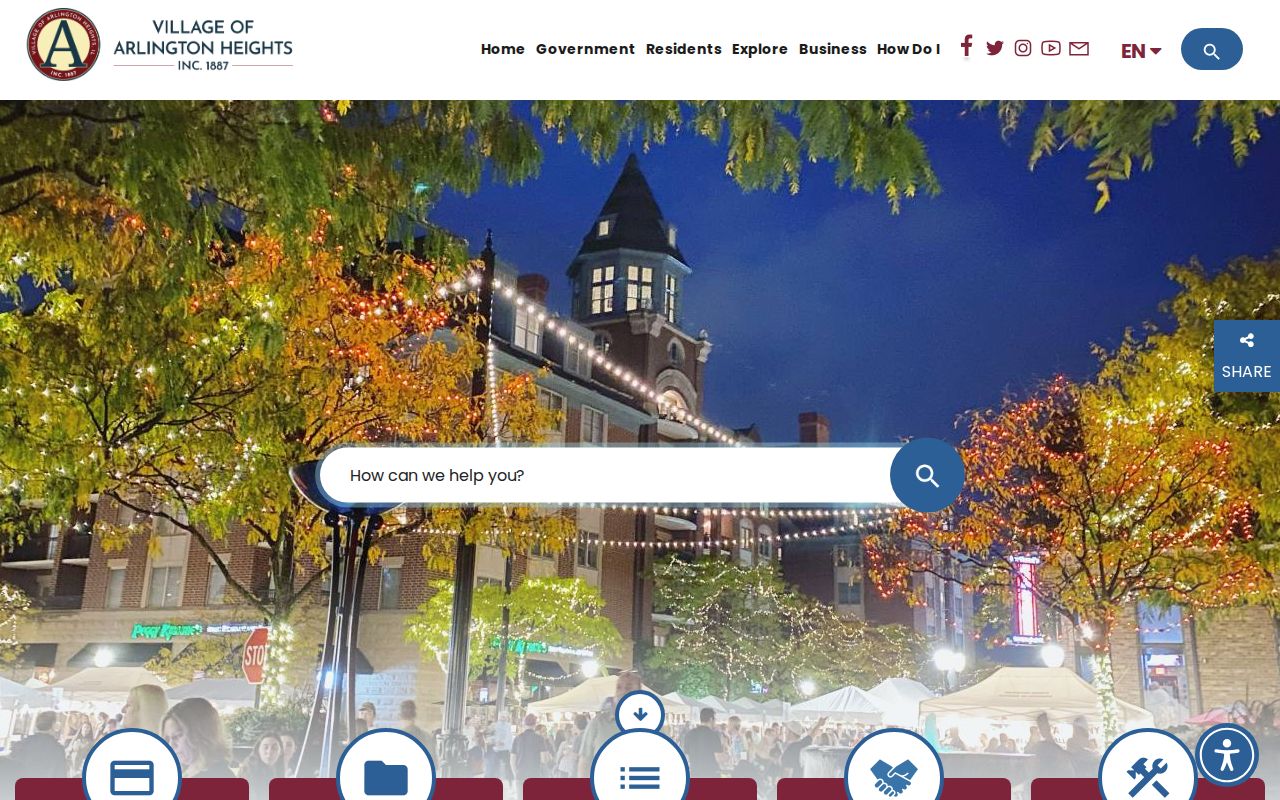
The Village site supplies department pages and public notices; the FOIA page and request portal cover records that are not directly published.
Request tip. Illinois FOIA generally gives a public body five business days to respond to a noncommercial request, subject to lawful extensions and exemptions.
Illinois Voter Lookup Limits
Illinois does not provide an open public voter directory for browsing Arlington Heights households. The online registration lookup verifies a particular voter through an exact set of details: first and last name, birth date, ZIP, and address controls. Bulk computerized voter data is restricted to qualified political organizations for a bona fide political purpose, with certifications and protected fields. A failed exact match can reflect a typo, address update, confidentiality measure, or registration issue. It should not be reported as proof that a person is absent.
The Illinois Address Confidentiality Program also supplies a substitute address to eligible survivors. Sensitive addresses and identifiers deserve special care even when another public index exposes a related name.
Lawful use. Use Arlington Heights resident records for legitimate personal and civic research. Never use them to watch, threaten, harass, or harm someone.
Arlington Heights Court Names
Cook County's Odyssey portal can search a case number or a party name and filter results, but its display is a public convenience and historical summary rather than the official court record. A docket is the dated list of filings and events in a case. The public-user guide shows case number, filing date, location, type, status, party role, hearings, and event details. Common names need a case number, date, division, or other fact before they can be tied to one Arlington Heights resident.
If the web portal fails, public terminals and the Clerk of the Circuit Court remain available. Paper search and copy requests provide another route. Probate files can help with an estate or heir search, while federal matters belong in PACER or the Northern District of Illinois rather than the county system.
Official Rolls Versus Search Sites
Official records and commercial people-finder services solve different problems. County and state sources disclose the office, date, field labels, and record role. Commercial services may merge addresses, relatives, phones, and names from many sources without showing why two items were joined. That can be fast, but it can also combine two people or retain an old address. Important claims should be checked with the custodian that created the underlying record.
| Source type | Best use | Main limit |
|---|---|---|
| Official parcel or deed index | Ownership and recorded events | Does not prove occupancy |
| Official court or license index | Named legal or professional role | Same-name risk |
| Library directory | A dated historical listing | Only covers its publication year |
| Commercial compilation | Finding possible leads | Source and freshness may be unclear |
Historical Arlington Heights Directories
Arlington Heights Memorial Library maintains the strongest local route into past residents. Its genealogy service points to the Shackley Room, newspapers, maps, microfilm, FamilySearch resources, house-history material, old telephone books, and Haines criss-cross directories. A dated holdings inventory also identifies local directories from 1930, 1935, 1943, and 1966 through 1971, plus Haines suburban volumes from 1979 forward. Because that inventory was issued in 1999, present shelf status should be confirmed with library staff.
Explore the AHML genealogy and local-history resources before an in-person visit.
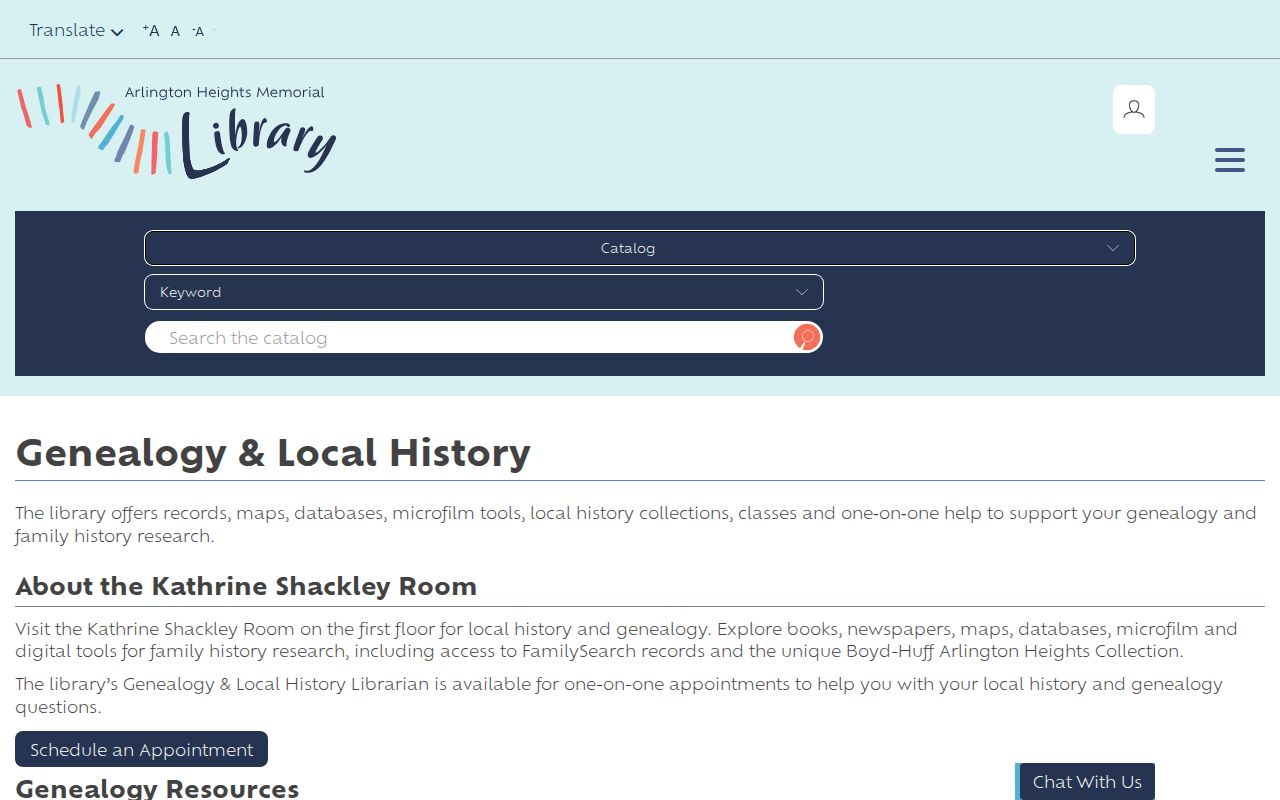
The library page identifies databases and staff help, while the separate house-history guide explains how street-arranged directories and subdivision sources connect a home to earlier listings.
The 1939 Arlington Directory
The free 1939 municipal directory in Illinois Digital Archives contains 123 scanned pages. Its opening material includes a street guide and street-location pages before the alphabetical resident and business entries. That order makes the volume unusually useful for an address problem. A researcher can normalize an old street spelling, locate the relevant page, and then read names, occupations, civic offices, churches, businesses, and organizations in their original context.
A directory entry is a dated snapshot, not proof of a continuous stay. Pair it with newspapers, census years, deeds, vital indexes, or museum files. Cook County also has a documented loss of records from 1831 through 1871 after the Chicago fire, so a missing county hit may call for church, cemetery, newspaper, map, or family sources rather than a confident “no record” conclusion.
Cook County Context Matters
Arlington Heights is a village within Cook County, and Chicago has served as county seat since 1831. That jurisdiction split explains why a local name often appears first in a county index. The county was created in 1831, later records survived in many separate series, and former Recorder duties now sit with the Clerk. The Village remains essential for local permits, plans, minutes, and municipal files, but it is not the deed recorder, circuit court clerk, or county assessor.
The Cook County overview supplies the government context behind that split.
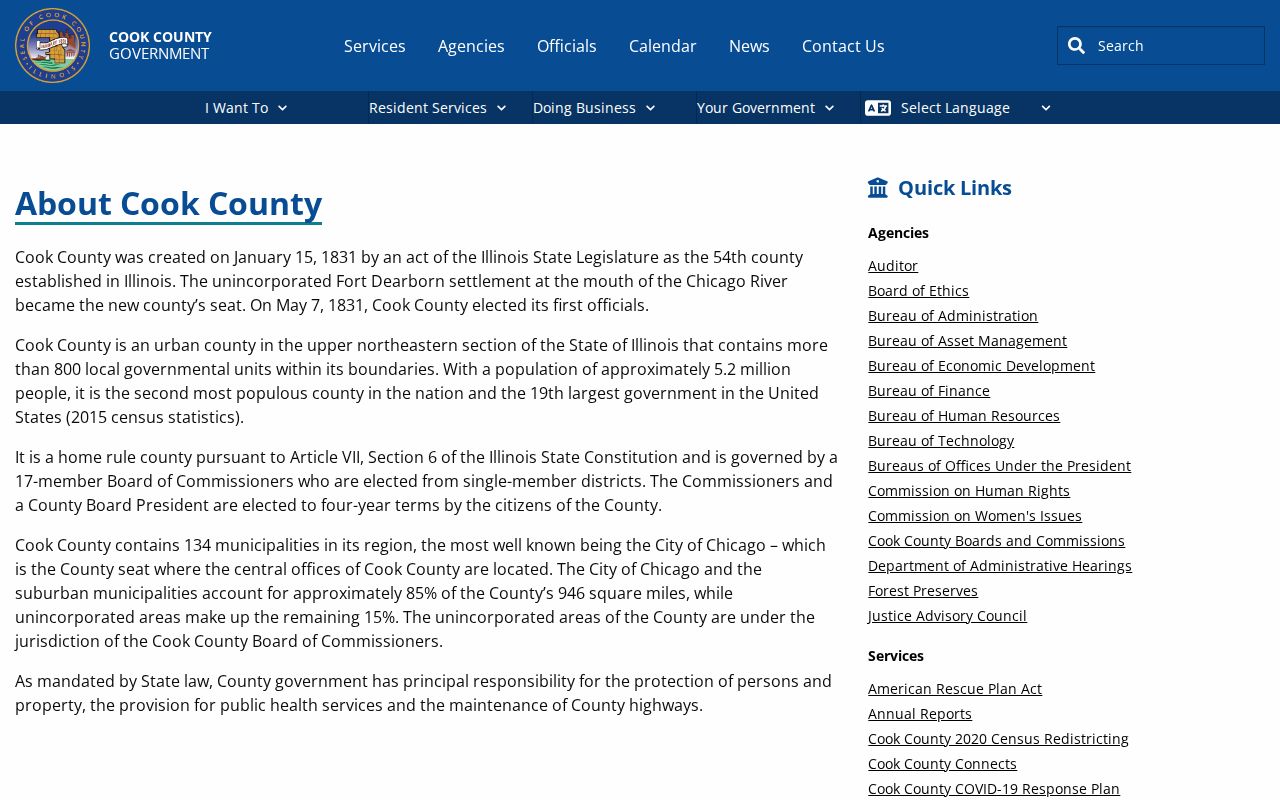
Keeping county and Village custodians separate prevents requests from being sent to an office that never held the sought record.
Records Arlington Heights Makes Now
Local archives are still growing. Arlington Heights Memorial Library's 2026 centennial includes a Century of Stories exhibit and a community-selected time capsule planned for opening in 50 years. The Park District Historical Museum received statewide recognition in 2026 for exhibits and collection work. A StoryWalk established at Recreation Park in 2025 creates another place-based cultural record, while the 2026 CookViewer release changes how current parcel evidence is viewed and exported.
These projects are useful reminders to date every residents directory source. A portal screen, civic exhibit, association boundary, or library collection can change even when the underlying deed or printed page does not. Save the title, keeper, access date, and page or document identifier with each finding. That small record makes later verification much easier.